Volatility, Change and Higher Prices: EENR Conference Explores Opportunities and Challenges in Energy
Quick summary: The 10th Annual North American Environment, Energy, and Natural Resources Conference at the University of Houston Law Center examined energy volatility, data centers, nuclear energy, grid reliability, tariffs and infrastructure demand.
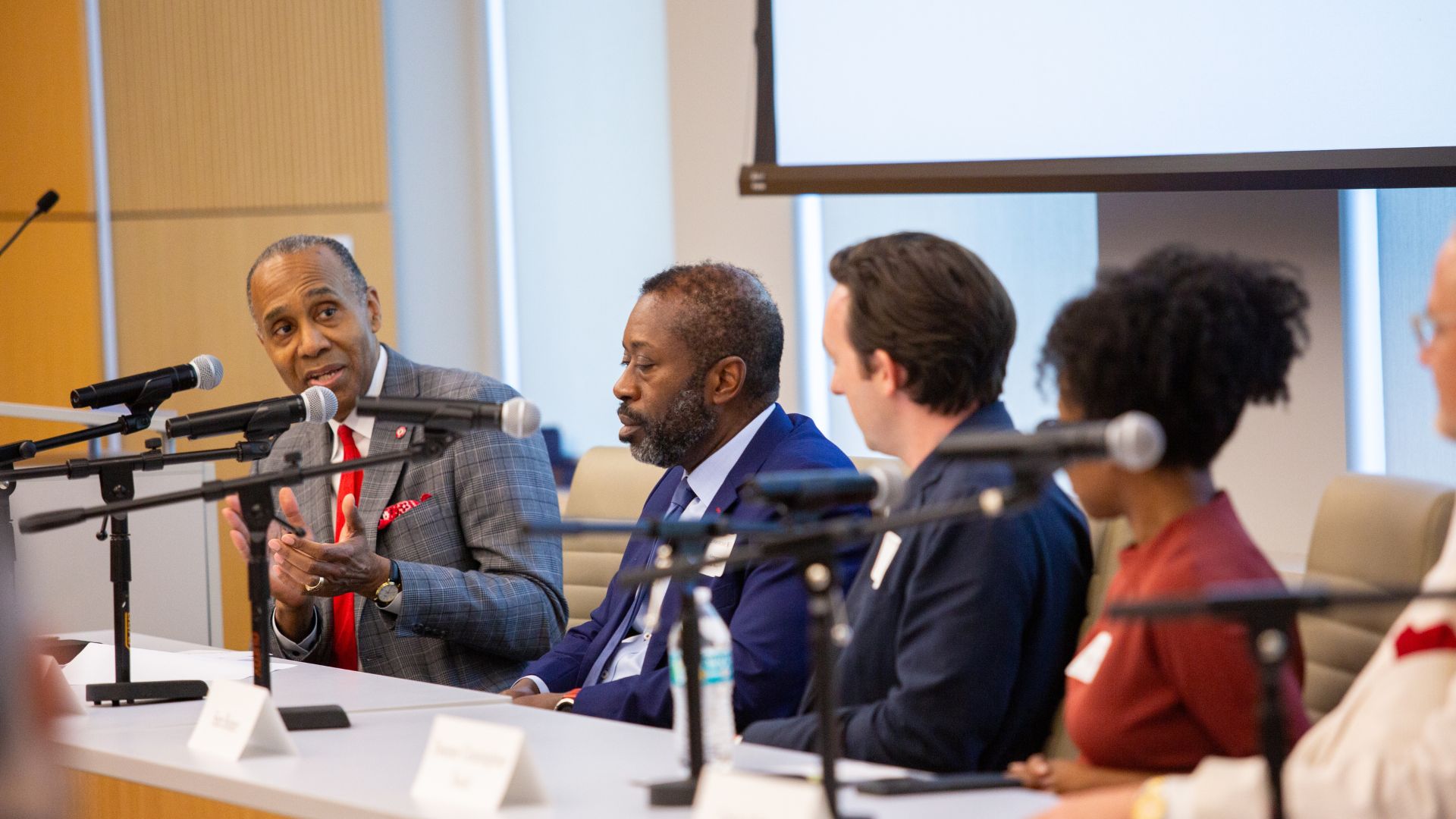
May 14, 2026 - A panel of energy executives told an audience at the University of Houston Law Center that in a time marked by war, tariffs, rapid regulatory change and escalating energy demands, one thing is certain.
“Volatility is the constant,” Dee Dee Stephens-Broussard, general counsel and corporate secretary at LiquidPower Specialty Products Inc., said during the 10th Annual North American Environment, Energy, and Natural Resources Conference.
Stephens-Broussard joined other executives for a panel moderated by UHLC Dean Leonard M. Baynes, who raised questions facing the energy industry, from the impact of the war and tariffs to the struggle to attract talent amidst increased immigration enforcement.
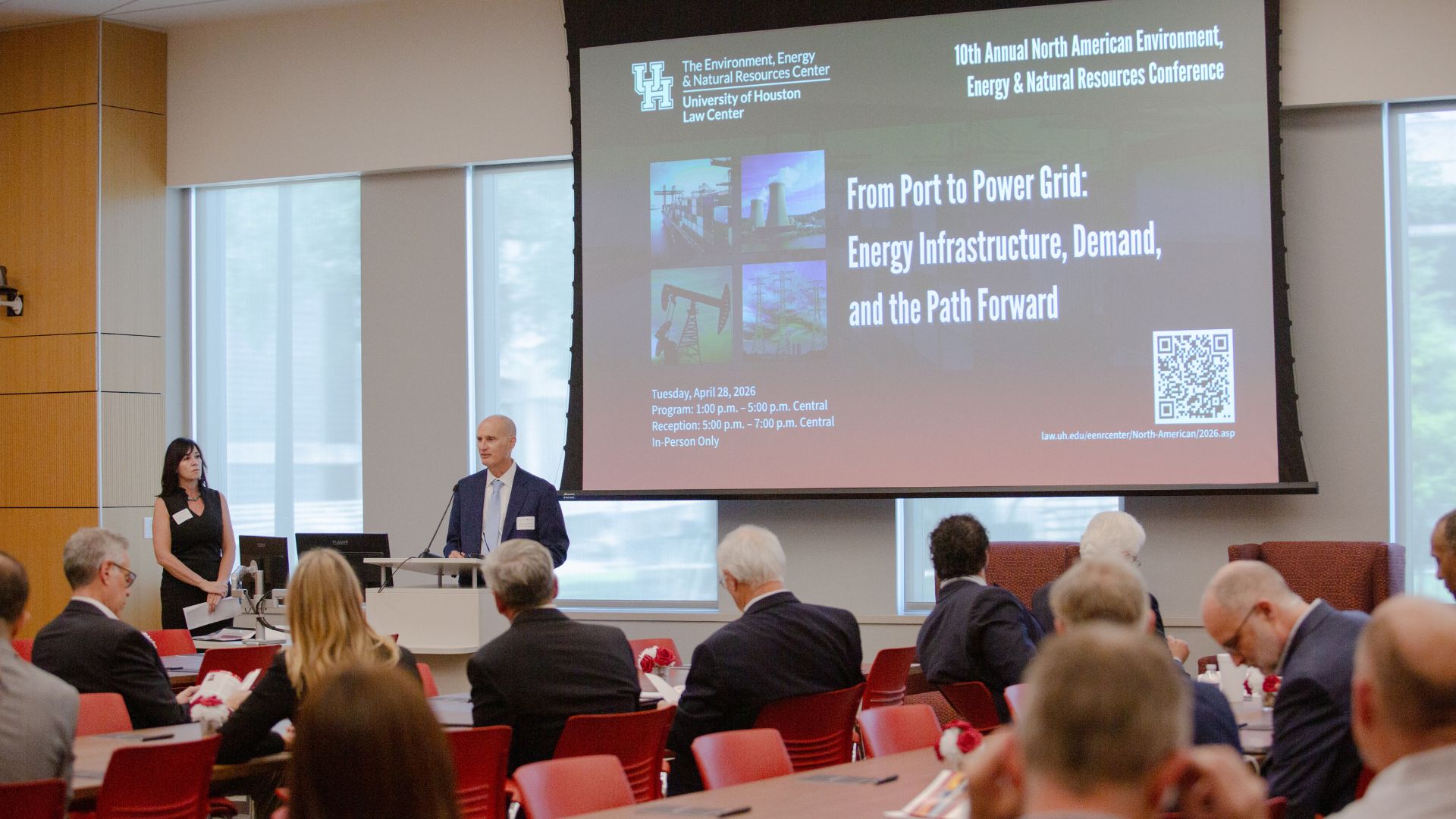
The conference, “From Port to Power Grid: Energy Infrastructure, Demand, and the Path Forward,” also considered Trump administration efforts to expand nuclear energy and issues concerning the growth of power-hungry data centers. It was sponsored by Blank Rome, the Environment, Energy and Natural Resources Center at UHLC, UH Energy and Gina S. Warren, co-director of the center.
Speakers noted that Trump administration efforts to speed development of new nuclear reactors and the rapid growth of data centers present opportunities for the sector. Others suggested a shifting of the global order, with the U.S. in danger of missing out.
“The rest of the world is moving on,” said Cody Johnson, CEO of SCS Technologies LLC. “They’re continuing with free trade agreements, and we’re going to be left behind.”
Rolling back regulations may complicate efforts by U.S. companies to assure international customers their products meet the stricter requirements in those countries, speakers said. Still, Johnson said industry has continued to support efforts to reduce emissions. “Our largest increase in backlog and sales has been in fugitive gas recovery,” he said. “We plan our business on a 20- to 30-year horizon, and we have customers all over the planet that do care. They are trying to do the right thing. Business has become an unlikely champion.”
Speakers said they expect oil prices to remain high. “We can see the price of crude is going to stay high,” said Audrey Guaqueta, global energy lawyer with Ecopetrol USA Inc. “What we’re seeing today is just the beginning of the volatility.”
A surge in applications to build data centers has sparked another level of uncertainty as worries mount about how to supply the electricity the centers require without hurting ratepayers or the environment.
“It’s the topic du jour in 2026,” said Frank Tamulonis, a partner at Blank Rome based in Philadelphia. He said one Chat GPT search requires as much electricity as 20 Google searches, along with as much as 24 ounces of water.
Tracy Hester, co-director of the Environment, Energy, and Natural Resources Center and professor of law at UHLC, highlighted Texas Senate Bill 6 as a key regulatory effort by the state. The law, passed in 2025, focuses on regulating large-load energy users, including data centers, to ensure grid reliability.
However, he said local entities are the biggest players in regulating data centers.
“The key word is local. The (efforts at regulation that) are succeeding are at the city and county level,” including through the use of zoning laws, Hester said. “You would think the states would be in charge of this, but it is very much the cities. Their citizens are in harm’s way.”
In a divisive time, Tamulonis said data centers have drawn bipartisan reactions, in different ways. There is generally bipartisan support for the centers at the state and federal level, he said, while there is bipartisan opposition at the local level, albeit for different reasons.
One of the biggest concerns is the impact on local ratepayers, which has prompted some calls for the data centers to build their own power generating facilities. The expansion of nuclear power could play a role there, although Frederick Lowther, senior counsel at Blank Rome and an expert on large-scale energy projects, said no single source of electricity can meet the data centers’ need for 24/7 reliability.
But the Trump administration is all in on nuclear power, and Seth Cohen, chief counsel for nuclear policy at the U.S. Department of Energy, provided an update on its efforts, starting with four executive orders issued in 2025 to, among other things, speed the development of reactors and expand the fuel supply.
Cohen predicted at least three new reactors will be in operation by July, with between 10 and 12 nuclear reactors deployed on U.S. military bases by 2028. He said the aggressive timeline illustrates what can be done if there is the political will to do it and called for American leadership to dominate the field.
“After 2030, every reactor built around the world ought to be American designed, run on fuel enriched in the United States,” he said. “The time for America to be dependent on other countries is over.”
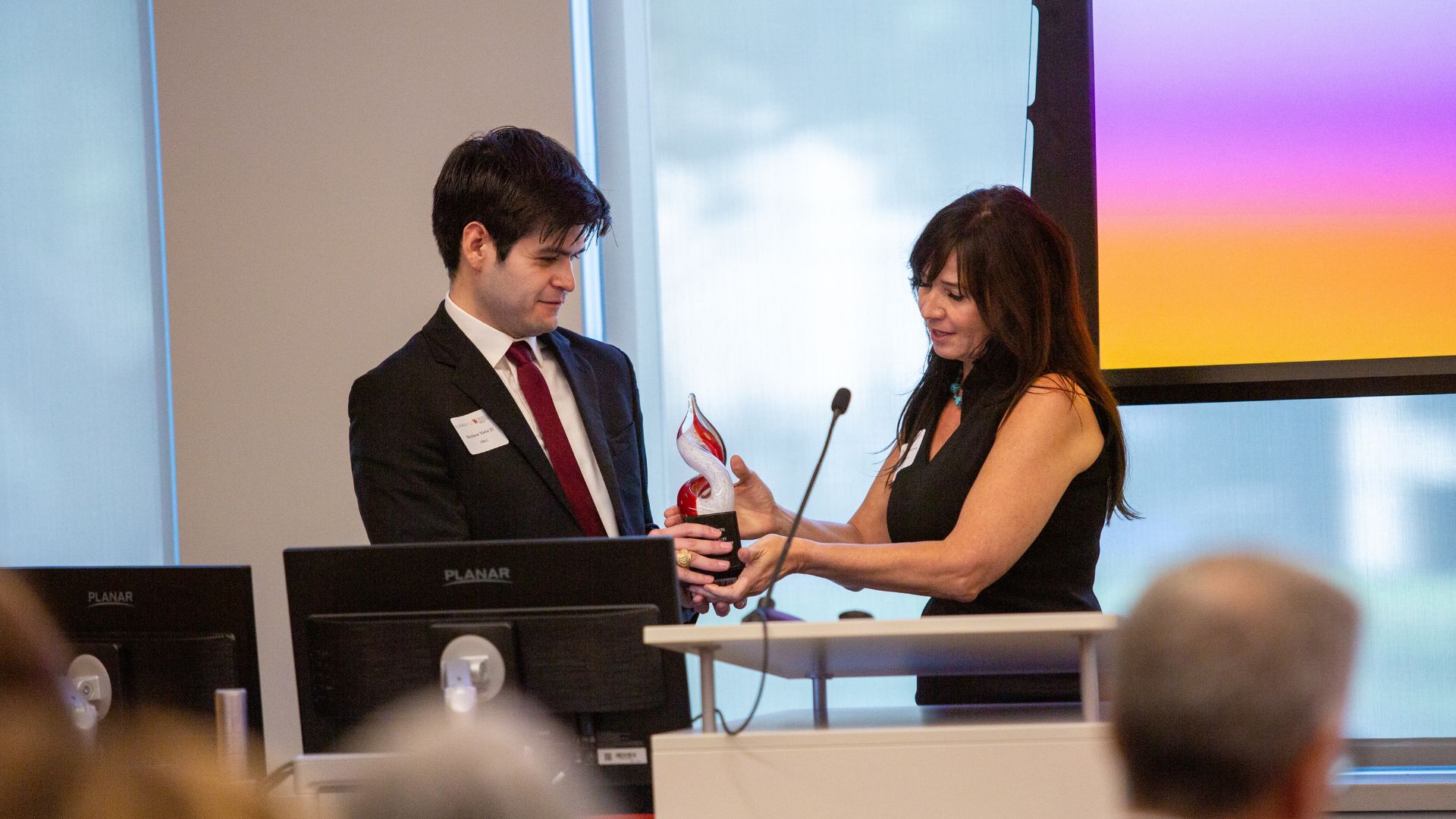
This year also marked the third annual $10,000 scholarship awarded to a UHLC student as part of the conference. This year’s award went to Matthew Nieto, Class of ’27, for his paper, “Algorithmic Power: Same Game, Faster Tempo,” looking at how artificial intelligence is changing the power industry. The award has been renamed the Susan L. Bickley Memorial Scholarship in memory of Bickley, a partner at Rome Blank who died earlier this year.
Bickley worked closely with Warren in organizing previous conferences, and they launched the scholarship together. Warren, A.L. O’Quinn Chair in Environmental Studies at the law center, described Bickley as a force for good and a mentor to many whose support for the scholarship illustrated her passion for mentorship.