

Wesleyan President Michael Roth Urges Universities to Protect Academic Freedom for Future of U.S. at UH Law’s 2026 Rosenberg Lecture
Quick summary: Wesleyan University President Michael S. Roth delivered the 2026 Yale L. Rosenberg Lecture at the University of Houston Law Center. Roth focused on open dialogue, free speech and the importance of protecting academic freedom in higher education.
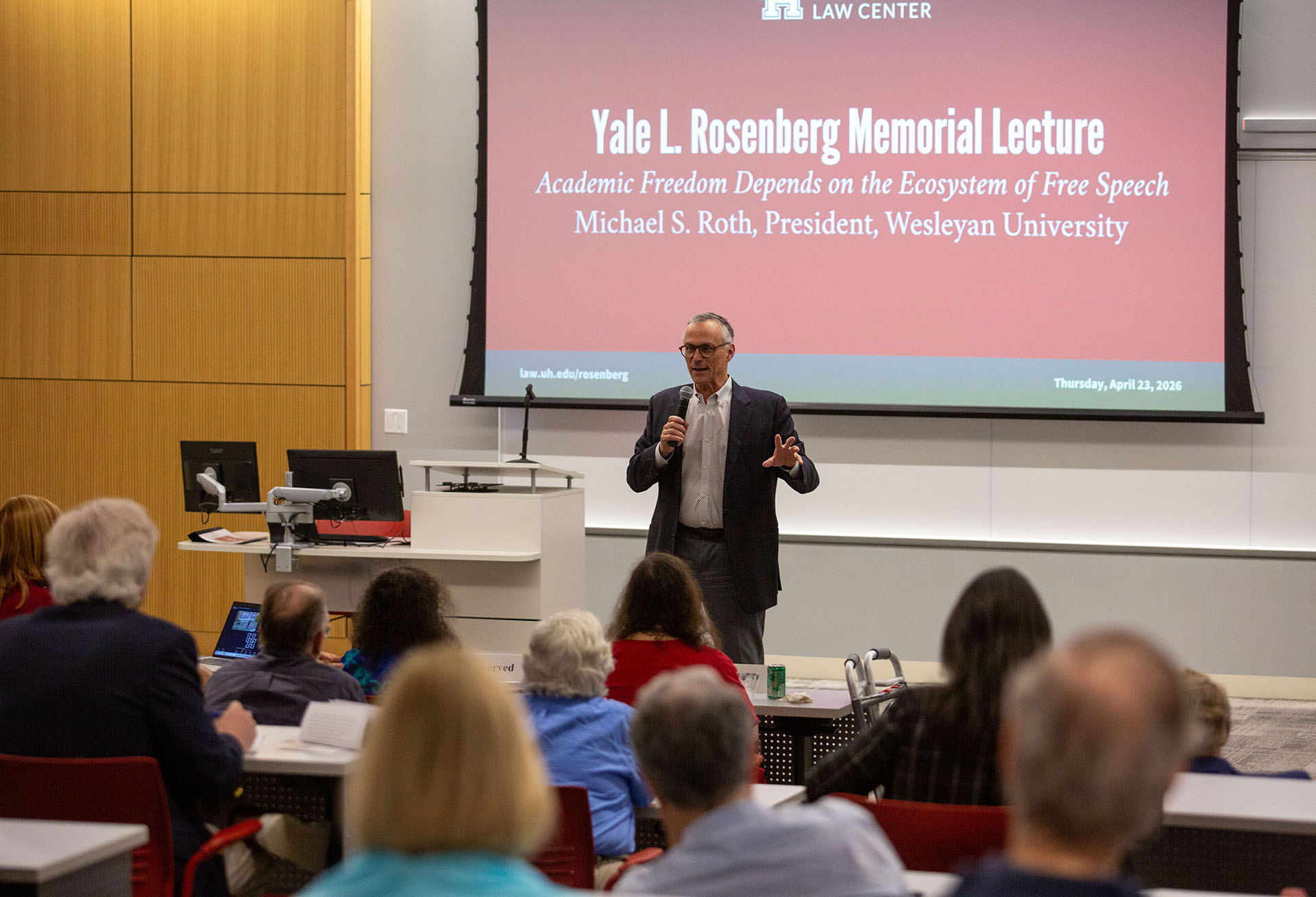
May 5, 2026 —Wesleyan University President Michael S. Roth warned of the risks of what he calls “anticipatory obedience,” arguing that university leaders and faculty who remain silent to avoid potential funding losses or other penalties from the federal and state governments undermine academic freedom.
Roth delivered the 2026 Yale L. Rosenberg Lecture at the University of Houston Law Center. The lecture series brings distinguished speakers to campus in honor of Yale L. Rosenberg, who joined the Law Center faculty in 1972.
Roth, a historian and longtime academic leader, examined the need for open dialogue to protect academic freedom during his lecture, “Academic Freedom Depends on the Ecosystem of Free Speech.” More than 50 people attended the event in person; another 200 participated online.
The current climate bucks a long tradition of academic freedom and discovery, Roth said. University researchers traditionally have assumed academic freedom guarantees the ability to pursue inquiry regardless of where it takes them.
“The great discoveries in science, the revolution in how we understand civil rights, how we think about history … without that freedom, you don’t know what you might have thought,” he said.
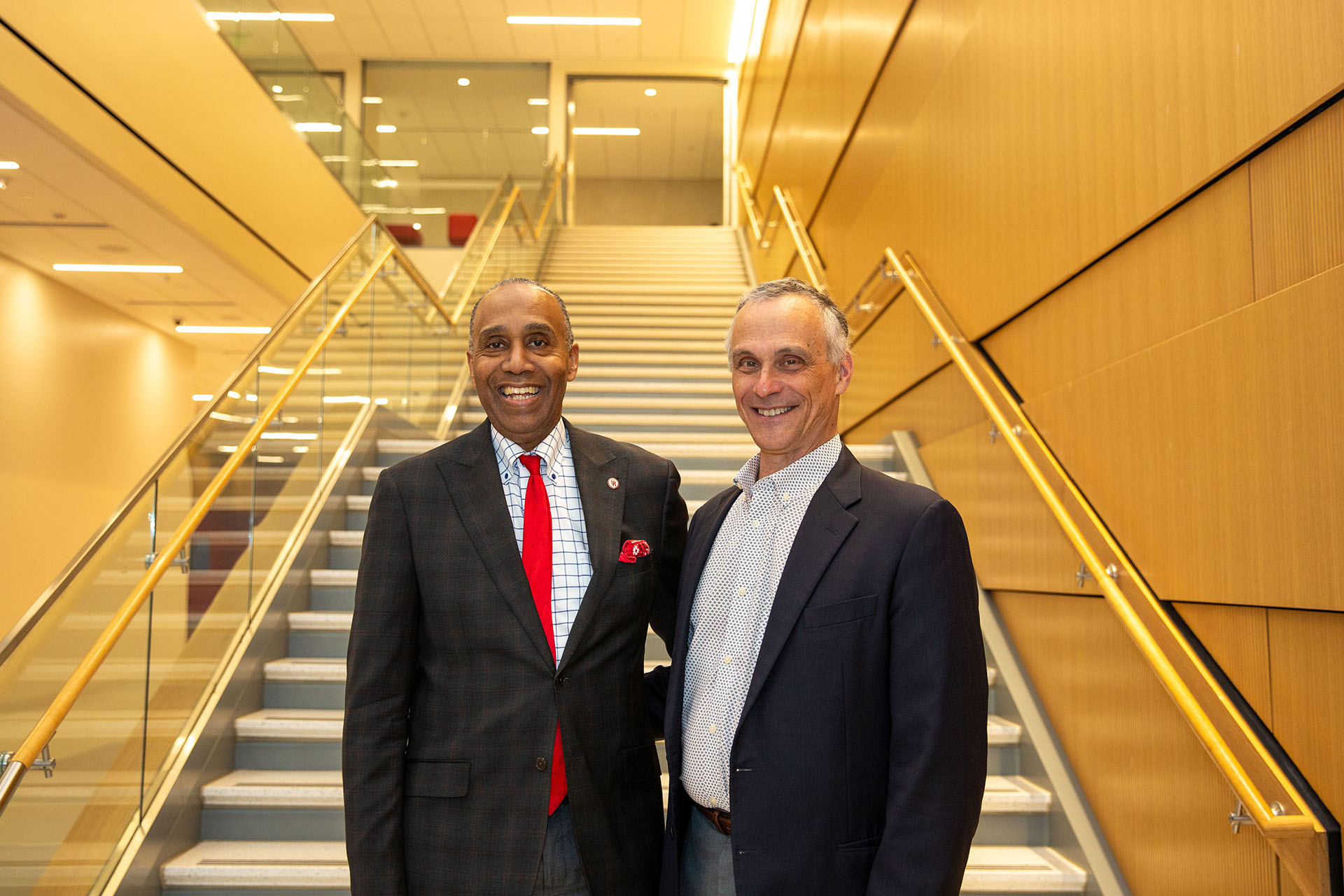
Since becoming president of Wesleyan University, a private university in Middletown, Conn., in 2007, Roth has spoken and written on key issues in higher education through books, op-eds and in appearances on cable news. In 2025, he received the PEN/Benenson Courage Award for his defense of academic freedom amid rising governmental pressure.
“He’s a public intellectual,” UH Law Dean Leonard M. Baynes said while introducing Roth. “He has engaged with some of the most challenging issues affecting higher education today.”
Much of Roth’s talk focused on federal actions impacting higher education, including policies related to diversity, equity and inclusion efforts, antisemitism and other issues. He also noted that Texas officials have taken similar actions.
Roth also critiqued universities, citing what he termed a lack of “viewpoint diversity” on many college campuses. He said progressive bias is especially common in the northeastern United States, resulting in intellectual homogeneity, notably in the humanities and social sciences. Roth said he has worked to counter that trend by championing unpopular speakers and viewpoints to avoid campus becoming “an echo chamber.” But, he added, it is a mistake to rely on government to ensure conservative voices or other unpopular viewpoints aren’t stifled.
Roth pointed to the cancellation of federal research grants under the current administration, saying such actions overlook the government’s own long-term vested interest in the outcomes, whether that’s work with military applications or medical discoveries. Instead, he said the government is currently focused on short-term benefits.
In addition to the outright cancellation of some research, it has also had a chilling effect overall, he said. “It should remind us that our freedoms can be imperiled for the short-term gains of others.”
He said universities should encourage students to be involved in political and social issues, regardless of which parties and candidates the students support, to prepare them to stand up to “authoritarianism” in the future.
Roth is one of a handful of higher education leaders who have pushed back vocally and publicly. Getting other schools to join in has been a challenge, he said. “It’s either based on convenience or fear,” he said. “I think the fear should not be underestimated.”

