

UH Symposium Explores Connecting Payment Reform to a Stronger Health Care Workforce
Summary: A University of Houston symposium brought together leaders across health care and policy to examine how value-based care depends on a workforce prepared to deliver coordinated, patient-centered care.
Key Takeaways
- Value-based care requires workforce transformation alongside payment reform.
- Leaders across health care sectors emphasized coordination and prevention.
- Public health funding instability impacts workforce sustainability.
- Collaboration across systems is key to long-term success.
APR. 16, 2026—As the health care system faces mounting pressure to improve outcomes, reduce costs, and better serve patients with complex needs, one challenge has come increasingly into focus: payment reform cannot succeed unless the health care workforce is prepared to support a different model of care. That theme anchored a recent University of Houston symposium that brought together leaders from medicine, public health, academia, and industry to discuss the transition from fee-for-service to value-based care.
Hosted by the UH Humana Institute in partnership with the Tilman J. Fertitta Family College of Medicine, the “Value-Based Care & Healthcare Workforce Symposium” examined how reimbursement structures shape not only patient care, but also the training, support, and capacity of the people who deliver it. Jessica Mantel, director of the Health Law & Policy Institute at the UH Law Center, moderated the discussion and opened the program by outlining the limitations of fee-for-service reimbursement and the need to build a workforce equipped to thrive in value-based care models.
“We have this system that rewards providers for doing more rather than rewarding them for improving patient outcomes,” Mantel said. “It’s also contributed to over-utilization of health care generally, but at the same time led to an under-investment in preventive care and disease management. So, there’s a strong interest in finding alternative ways of how to pay for health care in the United States.”
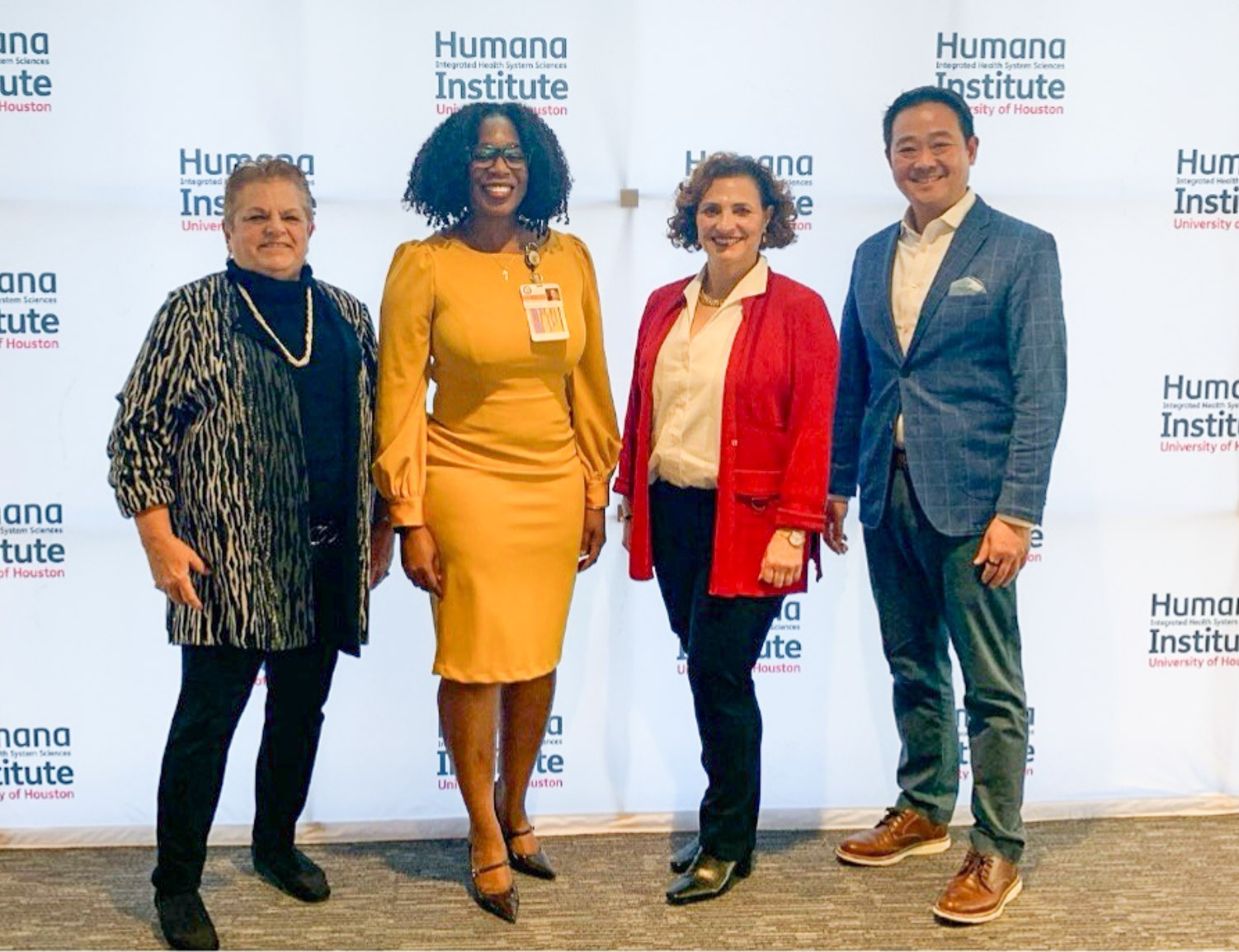
The panel featured Dr. Alex Ding, enterprise deputy chief medical officer at Humana; Dr. Nancy Dickey, president emerita of the Texas A&M Health Science Center and former president of the American Medical Association; and Dr. Renita Madu, assistant director at the Houston Health Department. Together, they explored how the move to value-based care depends on more than changing reimbursement formulas. It also requires clinicians, public health professionals, and health systems to work in more coordinated and sustainable ways.
Ding emphasized that Humana’s experience with value-based care shows benefits for both patients and providers. “We at Humana have found that in value-based care, providers get more time to spend with their patients. They get to build deeper, stronger therapeutic relationships for that doctor-patient relationship,” he said. “And that ultimately serves as a strong foundation for why value-based care continues to succeed.”
Dickey pointed to integrated care as another essential part of the transition. “Value-based care puts a greater emphasis on integrated care,” she said. “In order for it to work effectively, we have to have all of the different players talking to each other, sharing information, and making sure that the patient doesn’t just get this piece of care, but we [physicians] talk about their access to food, their availability of housing, [and] their availability to buy the medications that they take.”
Madu underscored the challenges facing public health agencies, whose ability to support communities often depends on unstable funding streams. “We [public health department] live off grants, and [when] grants get cut, and that influences our workforce, and so we’re cutting [the] workforce, and that then ultimately influences the population — it’s all interconnected,” Madu said.
Throughout the symposium, panelists highlighted the need for earlier and more sustained preparation for value-based care, stronger data and care-coordination infrastructure, and greater collaboration across providers, payers, public health agencies, and community partners. By bringing those perspectives together, the event underscored how payment reform and workforce development are deeply linked in the effort to build a more effective and sustainable health care system.

