

What’s Really at Stake with World Cup 2026?
International Experts Examine Legal, Trade and Human Impact at UH Law Conference
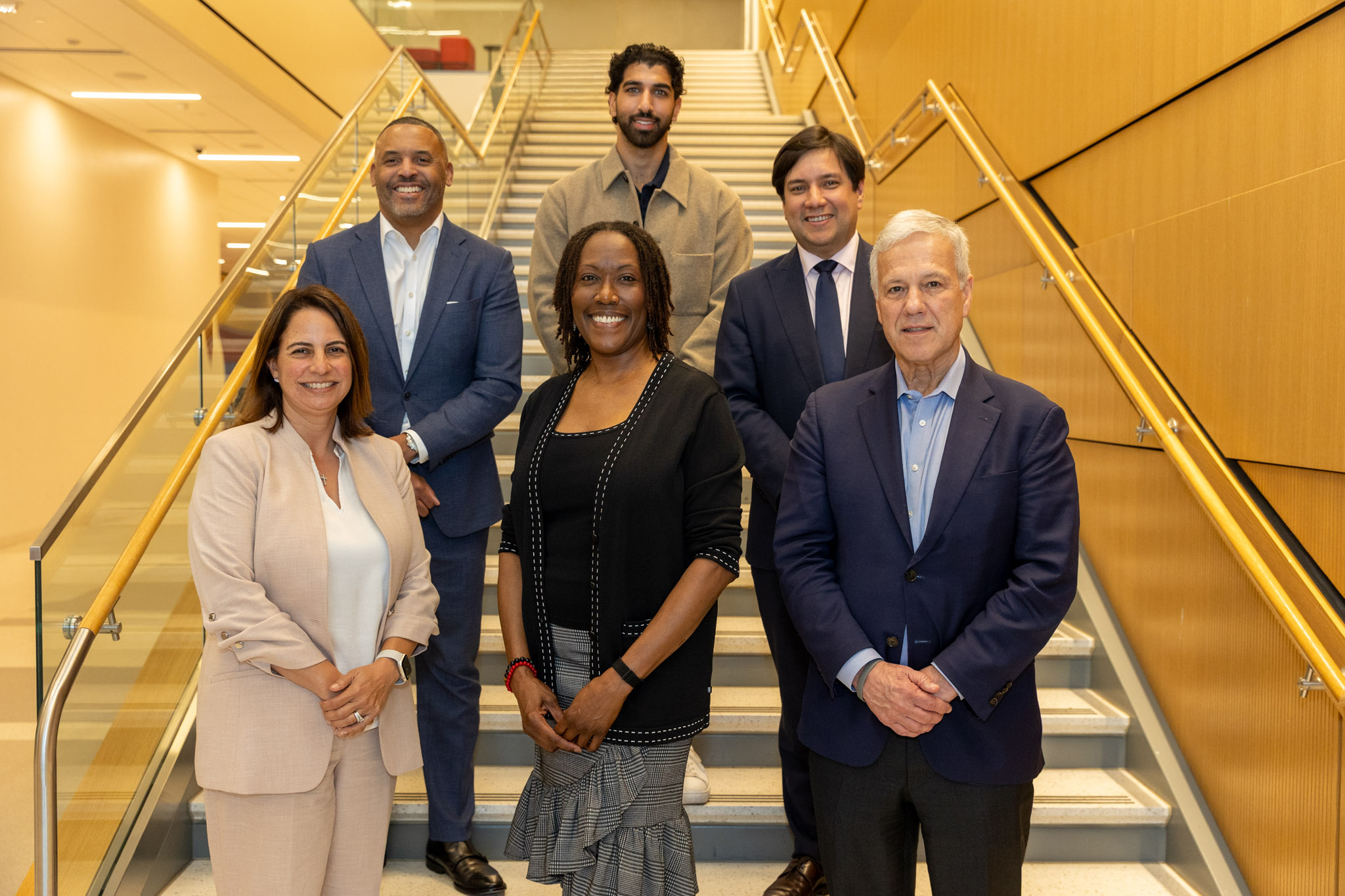
March 26, 2026 — Soccer fans may be eager to watch superstar Cristiano Ronaldo when Germany plays Curacao in Houston this summer, but for the legal community, the 2026 FIFA World Cup represents something more: a high-profile opportunity to showcase how legal frameworks can bolster international cooperation.
That intriguing idea brought together experts from across the United States, Mexico and Europe to the University of Houston Law Center recently to discuss the ramifications during a two-day symposium, “From Kickoff to Consensus: The 2026 FIFA World Cup and North American Cross-Border Cooperation.”
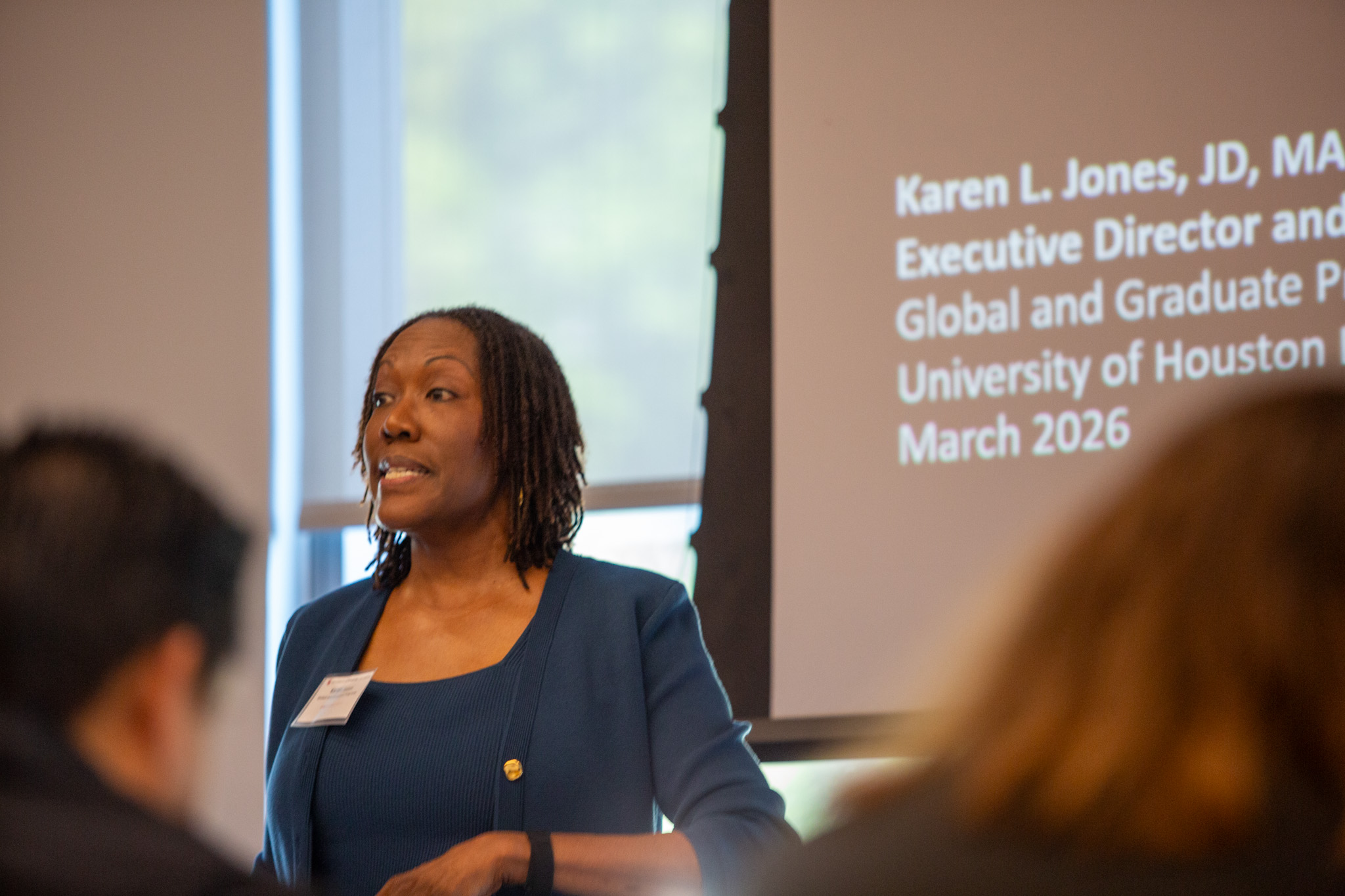
“Our goal is not simply to discuss the World Cup as a spectacle, but to discuss what it reveals about the ways in which legal institutions shape international events,” said Karen Jones, executive director of global and graduate programs at UHLC, as she welcomed attendees.
This will be the first time three countries have co-hosted, and the first time World Cup games have been held in the United States since 1994. The tournament will test how well the hosts United States, Mexico and Canada coordinate on complex issues including security, infrastructure and logistics at a time of heightened tensions over trade and border security. The event also coincides with the upcoming five-year review of the U.S.-Mexico-Canada trade agreement, further emphasizing the need to work together.
Both the FIFA World Cup and the US-Mexico-Canada trade agreement are undeniably big business.
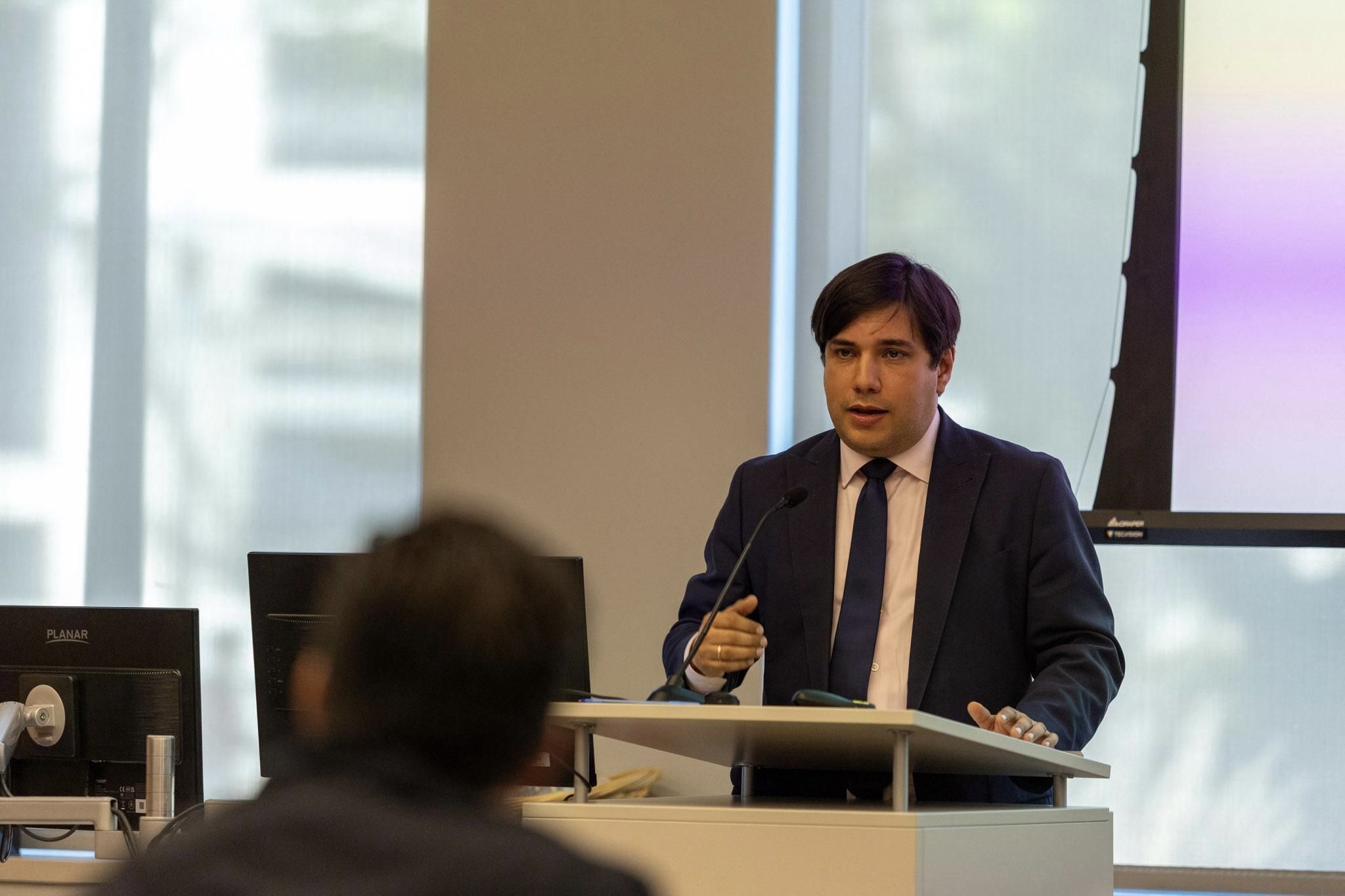
“We say it’s like having 104 Super Bowls in 30 days,” said Lynn Carillo de la Camara, director of Commercial Legal for FIFA, as she addressed how global soccer’s governing body navigates the intersection of sports, policy and law. “FIFA is one of the largest media events in the world.”
Carillo de la Camara added that teams of lawyers will be deployed to oversee operations in stadiums across the three countries, including in Houston, where seven matches are scheduled.
High Stakes and Economics
An estimated 5.5 million people are expected to attend at least one match, with a television audience estimated at six billion, said Brian Michael Cooper, attorney at Greenberg Traurig, a speaker at the event.
“The economic benefits are incredible,” said Cooper, who also teaches sports law as an adjunct professor at UHLC. For Houston alone, he said the economic impact is expected to be $1.5 billion, with 550,000 visitors coming to the city for the games.
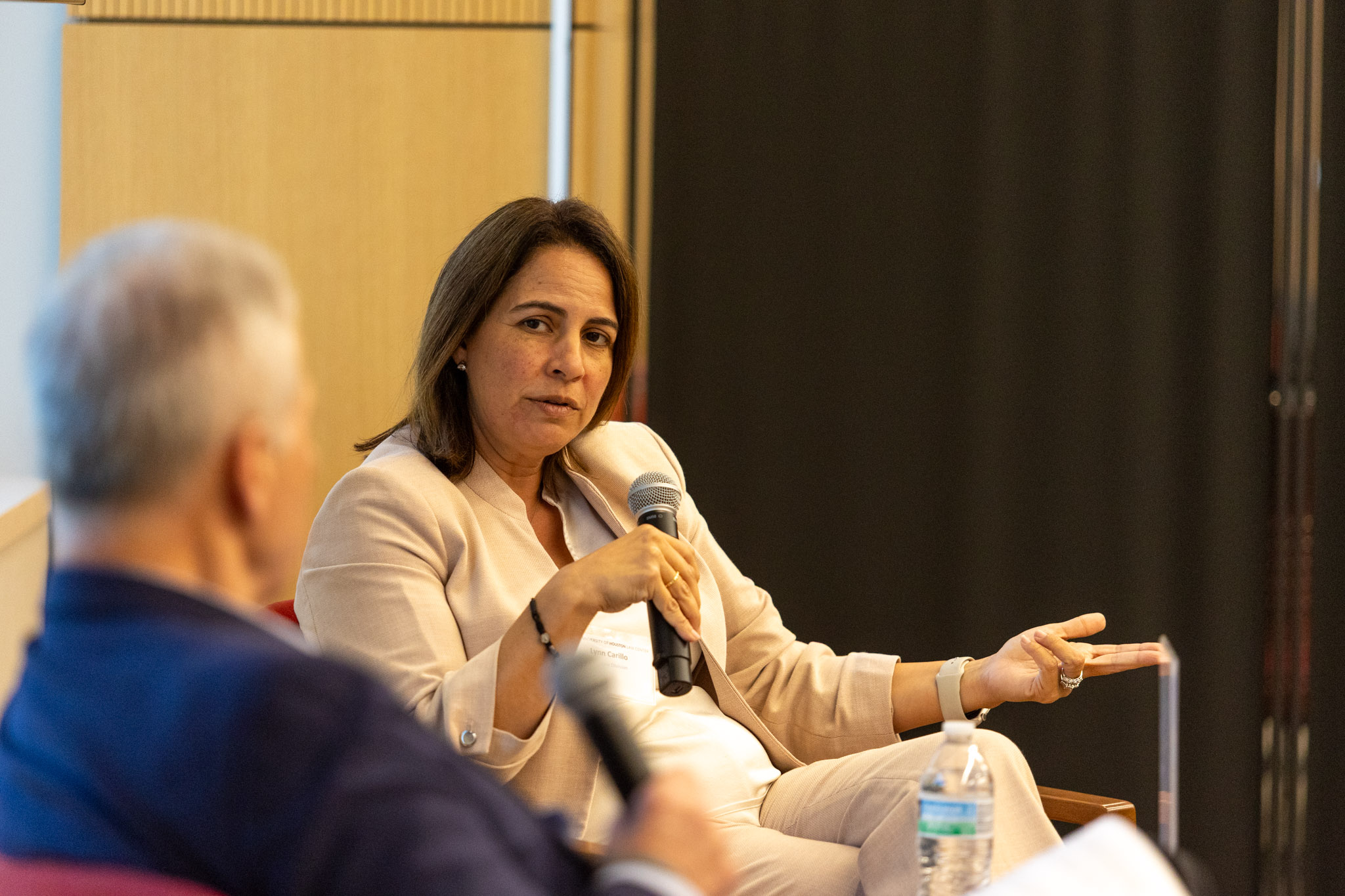
Julián Cárdenas, director of the Center for U.S. and Mexican Law at the UHLC, noted that large sums are also at stake with the upcoming review of the USMCA trade agreement, which took effect in 2020 and governs $2 trillion in international trade among the three nations.
Much like international sports, trade can be a unifying force, said Cárdenas, who testified in December before the Office of the U.S. Trade Representative as the office prepared for the upcoming formal review, set for July. The agreement currently extends through 2036, with a review every five years. If all partners agree, that could be extended to 2042, although the lack of agreement could trigger annual reviews, adding to uncertainty for investors and business partners.
Like the FIFA World Cup, the trade agreement offers an example of how the United States, Mexico and Canada can work together, Cárdenas said. But both also face challenges.
“Tensions exist in terms of the relationship between the U.S. and Mexico, the U.S. and Canada,” he said, including over tariffs and border security.
Even as speakers emphasized the opportunity for the World Cup to strengthen ties between the three countries, Cooper and others said current tensions have complicated matters.
“The 800-pound gorilla in the room is, what is going to happen?” Cooper said. That includes concerns about travel restrictions – will fans be reluctant to come because of concerns about security and the relative ease or difficulty of traveling to matches in each of the three countries? “These are legitimate concerns,” he said.
Carillo acknowledged the worry. “Some things are beyond our control,” she said. “U.S. policy is beyond our control. We have to have a good relationship with our host countries. We are working very hard to make sure that people who need to travel can travel.”
Ensuring respect for human rights is also an ongoing concern. Jones discussed her work studying human rights in the context of the World Cup and other mega sporting events, noting that FIFA and other international sporting organizations have recognized their human rights responsibilities. “The question is whether they are capable of enforcing them.”
Among the human rights risks during these huge sporting events are labor exploitation, displacement of local populations due to development and restrictions on protest and expression, she said. Despite decades of documented abuse, few cases have been resolved, she said.
“Global sport does not suffer from a lack of human rights commitments. It suffers from a lack of human rights governance,” Jones said.
Will Increased Cooperation Last?
Coordination is further complicated by the fact that the three countries have different legal frameworks and political priorities, said Alina Gamboa Combs, lecturer and researcher at Universidad Anáhuac in Mexico City.
Still, Carillo said, the example set by three countries co-hosting such a mega sporting event is important. “When we take a step back, there are still three heads of state agreeing on something, and on something that people like.”
Whether that agreement will extend beyond the soccer pitch remains to be seen. Santiago Isusi Jiménez, public policy advisor at Holland & Knight in Mexico City, presented research suggesting mega sporting events do not automatically produce deeper regional integration. “The World Cup can be understood as a stress test for North American regional cooperation,” he said. “The long-term legacy of the tournament will depend on whether these temporary forms of cooperation can be institutionalized beyond the event itself.”
Many of the speakers remain hopeful.
“Ultimately, sports is a unifier,” said Cooper. “If there is something that can bring nations together, it’s going to be sports.”

