

UH Law Center Event Highlights Data Showing Harris County Bail Reforms Cut Costs, Reduced Coercive Pleas and Maintained Public Safety

A robust round table discussion, titled " Implementing Bail Reform in Harris County,” was a key part of the program.
Feb. 25, 2026 — Findings presented at the “Bail Reform and Backlash: Litigation, Legislation, and Experimentation” conference at the University of Houston Law Center show that misdemeanor bail reforms in Harris County have reduced system costs by roughly 30%, sharply decreased the use of secured money bonds and lowered the number of guilty pleas driven by pretrial detention, all without harming public safety.
During a featured panel titled “Win-Win Misdemeanor Bail Policy: Lessons from Data on Harris County Reforms,” researchers presented findings on the county’s shift from wealth-based detention to individualized, risk-based release under the federal consent decree in O’Donnell v. Harris County.
Brandon L. Garrett, director of the Wilson Center for Science and Justice at Duke Law, and Dottie Carmichael, principal investigator at the Texas A&M University Public Policy Research Institute, reported that secured bonds have fallen dramatically since reforms took effect. The data also shows fewer defendants pleading guilty simply to secure release from jail and a significant increase in case dismissals.
“What really happened under the O’Donnell consent decree is that a system that had been focused on pretrial detention involving coercive jail pleas, putting people in jail, was less safe and more costly,” Carmichael said. “What O’Donnell has done is shift all that toward a system focused on due process.”
Importantly, researchers said rearrest rates have remained stable or declined, even as more people are released pretrial. Despite expanded due process protections, including greater attorney involvement and additional court appearances, overall system costs have dropped by about 30%, according to the analysis.
Sandra Guerra Thompson, the Newell H. Blakely Professor of Law at UHLC and deputy monitor of the federal consent decree, said monitors regularly engage community stakeholders, including mental health providers within the Harris County Jail, to evaluate how reforms function in practice.
“One of the things that we've found is that when we're talking about people who are in jail because they can't afford bail, we talk to a lot of the providers of mental illness services,” Thompson said. “We are largely trying to bring community perspective to the work that we do as monitors.”
Panelists described the reforms as a “win-win,” citing fairer procedures, reduced racial disparities, lower detention and sentencing rates, and improved efficiency without compromising safety.
Implementing Reform in Practice
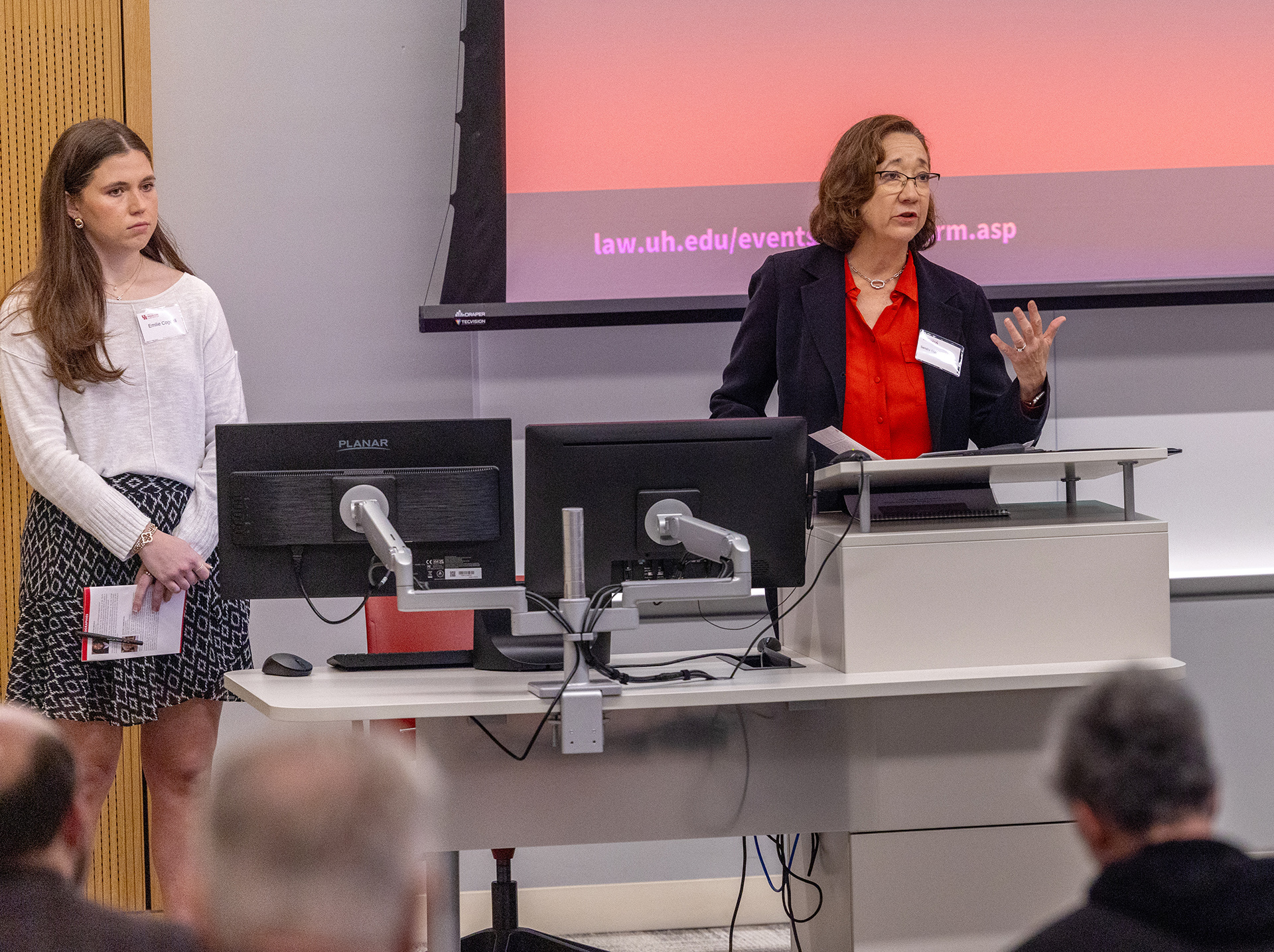
Sandra Guerra Thompson, the Newell H. Blakely Professor of Law at the UH Law Center, organized the conference.
A separate practitioner roundtable focused on the operational realities of implementing bail reform in Harris County.
Participants included Porscha Brown, executive director of the Harris County Office of Managed Assigned Counsel; Genesis Draper, Harris County’s chief public defender; Paul Heaton, academic director of the Quattrone Center for the Fair Administration of Justice of the University of Pennsylvania; Natalie Michailides, director of Harris County Pretrial Services; and Sean Teare, Harris County district attorney and UH Law alumnus. The discussion was moderated by Anna VanCleave of the University of Connecticut School of Law.
Panelists emphasized the fast-paced nature of probable cause hearings, where judges must assess risk, mental health needs and community ties within minutes.
“It can’t all happen at midnight,” Draper said, noting that additional services and wraparound support often follow initial hearings.
Participants agreed that the reformed system has reduced unnecessary jail stays and curtailed “time served” pleas rooted in detention pressure, though challenges remain including limited mental health infrastructure and public misconceptions about pretrial risk.
“The consent decree, by every metric possible, is working,” Teare said. “Harris County is a more equitable, safer place for everyone involved once this started. The data is clear.”
Organizers said Harris County’s experience is now closely watched nationwide as jurisdictions debate bail policy. The event was sponsored by UHLC’s Criminal Justice Institute, the Houston Law Review and the UH Law Hunton Andrews Kurth LLP Fund.

Roundtable participants, L to R: Moderator Anna VanCleave of the University of Connecticut School of Law; Paul Heaton, academic director of the Quattrone Center for the Fair Administration of Justice of the University of Pennsylvania; Sean Teare, Harris County district attorney and UH Law alumnus; Porscha Brown, executive director of the Harris County Office of Managed Assigned Counsel; Genesis Draper, Harris County’s chief public defender; and Natalie Michailides, director of Harris County Pretrial Services.

