

‘Privacy is Safety,’ Cybersecurity Expert Warns at UH Law’s Domestic Violence Webinar 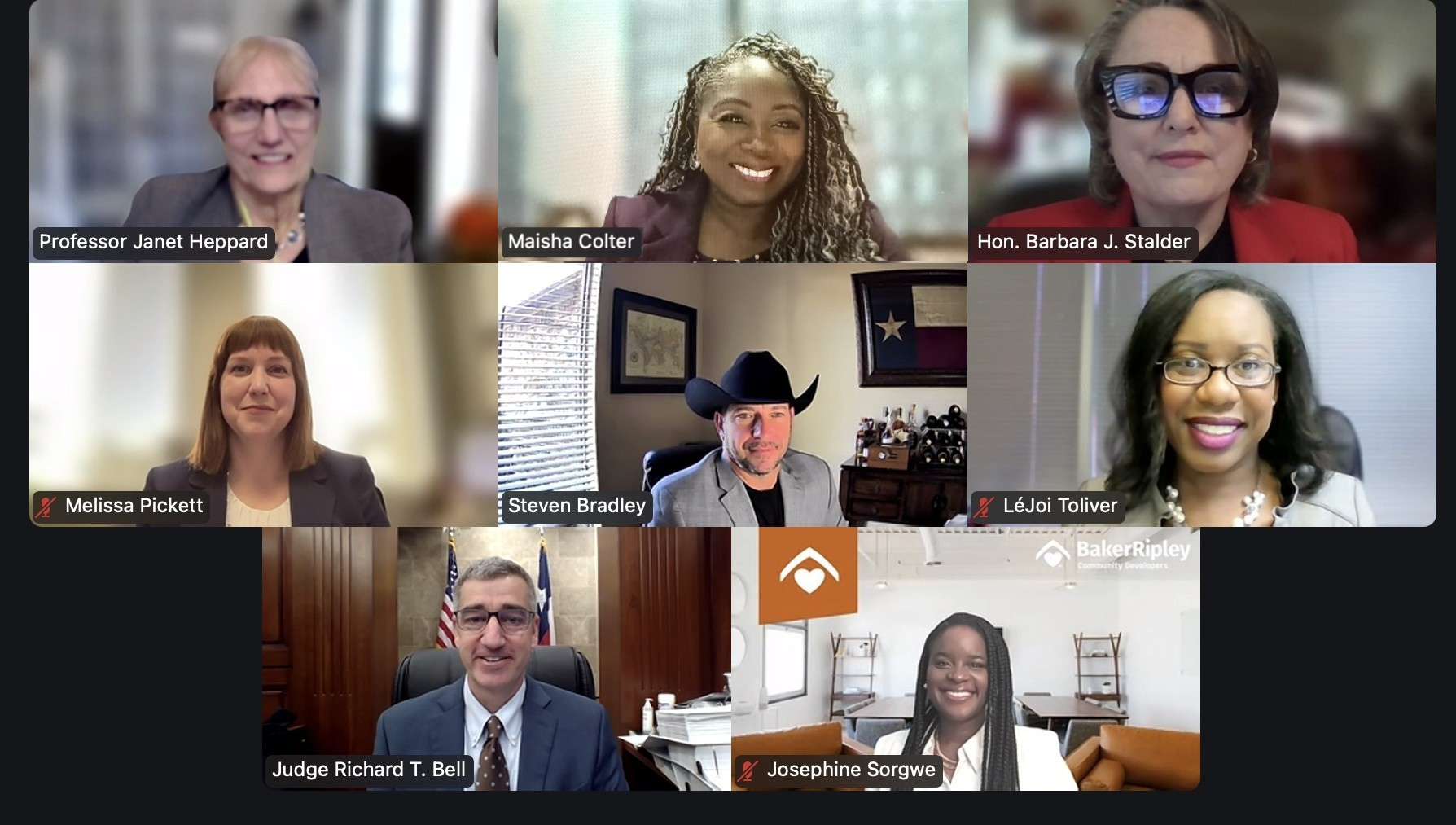
Nov. 12, 2025 — As smart technologies become go-to resources in daily life, they are also being used as tools of surveillance and control in domestic violence situations, according to a presentation at the “Domestic Violence Awareness: A Survey of Critical Issues for Family Law Practitioners” webinar. The event was hosted recently by the University of Houston Law Center in partnership with Aid to Victims of Domestic Abuse.
“Technology is not the problem. Technology is a tool,” said tech and cybersecurity expert Stephen Bradley. “But as fast as tech changes, laws can’t keep up.”
He listed a string of technologies that abusers can use to track, stalk and harass victims: wireless trackers, smart television sets, smart watches, even technology-equipped sneakers and sleep mats.
It’s now easy to change the number shown on caller ID, making it appear the call is from a familiar phone. Voice cloning technologies use artificial intelligence to generate speech from someone’s voice. Other apps allow users to fake an exchange of text messages, complicating cases in which text messages might be used as evidence of behavior.
Bradley said, attorneys must become familiar with how abusers use these tools and educate their clients about the risks posed by their personal devices and help them create a safety plan.
“We know privacy is safety,” he said.
Bradley was one of eight webinar speakers who addressed how attorneys can more effectively work with domestic violence survivors. The event also addressed how changing laws and immigration-related issues intersect with domestic violence cases.
Understanding Changing Laws
The Honorable Janet B. Heppard, retired presiding judge of the 387th District Court and now an adjunct professor at UHLC, provided an overview of updates made by the Texas Legislature to laws governing the issuance of protective orders, along with a look at how several cases related to family violence could affect the field. Most changes passed by the legislature earlier this year were relatively minor, she said. “What the legislature mostly did in these statutes is to just clean them up a bit.”
One change, Heppard noted, is that courts are now required to ask people applying for a protective order if they want certain information, including their address, excluded from the public record. Attorneys should ensure that’s followed, she said.
Case law is evolving, and Heppard cited a handful of recent cases:
- Stary v. Ethridge, in which the trial court issued a lifetime protective order prohibiting a mother from contact with her children after her ex-husband alleged a history of family violence. The appellate court upheld the order, which was overturned and remanded to the trial court by the Texas Supreme Court.
- Vo v. Nguyen, in which, after the trial court denied a woman’s request for a protective order against her partner, the partner’s attorney successfully petitioned the court to require her to pay $6,000 in legal fees. The appellate court ruled that, although the Texas Family Code allows reasonable attorney fees to be awarded, in this case the lawyer did not adequately document the fees requested. “You need to prove up your attorney fees,” Heppard reminded the audience.
- Landa v. Rogers also deals with attorney fees. In that case, a woman was ordered to pay attorney fees to her partner after her request for a protective order was denied. The appellate court reversed the awarding of attorney’s fees and said fees in a protective order proceeding may only be awarded against the perpetrator and/or to another person if a false allegation of family violence has been made in bad faith to law enforcement. How that affects Vo v. Nguyen remains to be seen, Heppard said.
- A divorce case, Matter of Marriage of Bryant, in which a husband was granted sole managing conservatorship of the children after the wife’s request for a protective order was denied following extensive questioning of the wife and her witnesses about her claims of family violence. The appellate court sent the case back to the trial court on the issue of conservatorship of children.
Immigration Concerns
Clients who are not U.S. citizens – even those who may have some form of legal status – can pose unique challenges for attorneys representing victims of family violence.
“Immigration might not be your area of expertise, but being able to identify an issue is incredibly important,” said Josephine Sorgwe, director of immigration and civic engagement at BakerRipley. “It’s important to be able to point someone in the right direction.”
Immigration concerns have heightened in recent months, with undocumented clients often worried applying for a protective order or other relief could draw attention from immigration enforcement officers, Sorgwe shared.
Several relief programs were discussed, including:
- The Violence Against Women Act, which allows certain victims of domestic violence, including men and children, to qualify for permanent resident status through the family visa system instead of relying on their abusers because of domestic violence. It applies to the spouse, parent or child of a citizen or permanent U.S. resident, and the applicant must show they were subjected to abuse or extreme cruelty.
- U visa, created by the Victims of Trafficking and Violence Prevention Act to support law enforcement to investigate and prosecute crimes. Available to victims of certain crimes and their family members. Unlike the Violence Against Women Act, the U visa doesn’t require the abuser to be a U.S. citizen or permanent resident.
- Special Immigrant Juvenile visa allows immigrant children who have been abused, neglected, or abandoned by one or both parents to apply for permanent resident status.
“There is a lot of fear in the community, and each client will need to make an informed decision as to whether or not they want to move forward,” she wrote in response to a written question. “The best thing we can do is present their options and empower them to make the best decision for their situation.”
And she offered some advice for attorneys who want to help immigrant clients prepare for an uncertain future:
- Create a document box with all important documents (immigration court documents, immigration attorney contact information, passports, list of children’s medication, etc.).
- Consider arranging a temporary caretaker for U.S. citizen/permanent resident children. This could be done by a Power of Attorney or an Authorization for a Non-Parent Relative.
One key takeaway shared at the event was that safety and self-care are critical.
Maisha Colter, chief executive officer of Aid to Victims of Domestic Abuse, said attorneys representing survivors of violence, including family violence, are exposed to trauma in a variety of forms, including threats to their physical safety. Taking precautions – from locking doors to not sharing your personal cell phone number – can help.
“I don’t want to scare anybody, but (this) is an opportunity to think about safety and what we do,” she said.
Other speakers included:
- Melissa Cass Pickett, associate at Jenkins & Kamin LLP, overview of protective orders under the Texas Family Code and the Code of Criminal Procedure.
- The Honorable Richard T. Bell, associate judge, 387th District Court and adjunct professor, UHLC, on challenges related to family violence in the disability and LGBTQ+ communities, as well as those who do not speak English.
- LéJoi R. Toliver, managing attorney Fort Bend office of Aid to Victims of Domestic Abuse, on landlord/tenant rights involving family violence.
- The Honorable Barbara J. Stalder, former 280th Judicial District Court, and adjunct professor, UHLC, on dealing with high-maintenance clients.

