Regional AALS Workshop at UH Law Center Provides Future Legal Professors a Roadmap into Academia
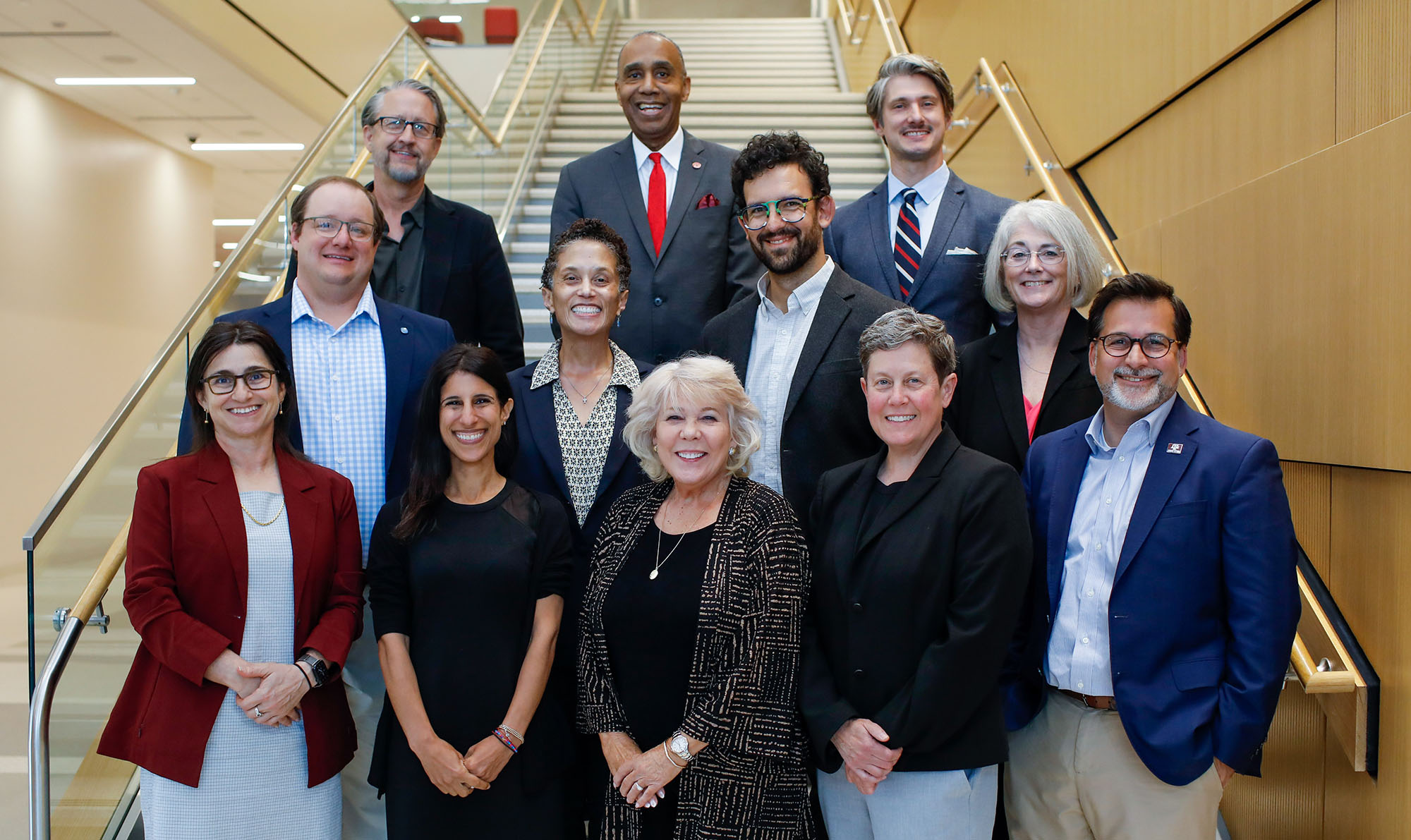
From top to bottom – Dean Emeritus Douglas Sylvester of Sandra Day O’Connor College of Law, UH Law Dean Leonard M. Baynes, Christopher K. Odinet, Texas A&M University School of Law; second row: Professor Martin Edwards, University of Mississippi School of Law, Professors Meredith J. Duncan and Peter Salib with UHLC, and Dean Patricia Roberts of St. Mary’s University School of Law; and bottom row: Professor Emily Berman with UHLC, Professor Orly Mazur of SMU Dedman School of Law, Professor Victoria Mather of St. Mary’s University School of Law, Kyle Velte with University of Kansas School of Law and Dean Robert Ahdieh of Texas A&M University School of Law. Missing: Steve Clowney, University of Arkansas School of Law.
Nov. 11, 2025 – The University of Houston Law Center hosted aspiring law professors from across the region for the Association of American Law Schools Southwest and Big 12 Faculty Pre-Recruitment Workshop, which provided insights into faculty hiring, scholarship, teaching and more.
The event, “So, You Want to Be a Law Professor?” drew participants from Texas, other Southwestern states, as well one participant who flew in from Africa for a day of panel discussions, networking and one-on-one interviews with law school representatives.
“Law school is about educating students of every background and helping them excel,” said University of Houston Law Center Dean Leonard M. Baynes. “That’s why we need great law professors. We want to make sure many law professors from a wide range of professional backgrounds to help all our students learn, develop and grow.”
The event was co-convened by ASU Sandra Day O’ Connor College of Law, Baylor Law School, SMU Dedman Law School, St. Mary’s University School of Law, Texas A&M University School of Law, Tulane Law School, University of Arkansas Law School, University of Arkansas at Little Rock, William H. Bowen School of Law, University of Cincinnati College of Law, University of Kansas Law School, University of Mississippi School of Law, University of Oklahoma College of Law, and University of Utah S.J. Quinney College of Law.
The workshop also partnered with regional and state bar associations, including the Austin Bar Association, Dallas Bar Association, Houston Bar Association, Houston Young Lawyers Association, San Antonio Bar Association, Tarrant County Bar Association, and the Utah State Bar.
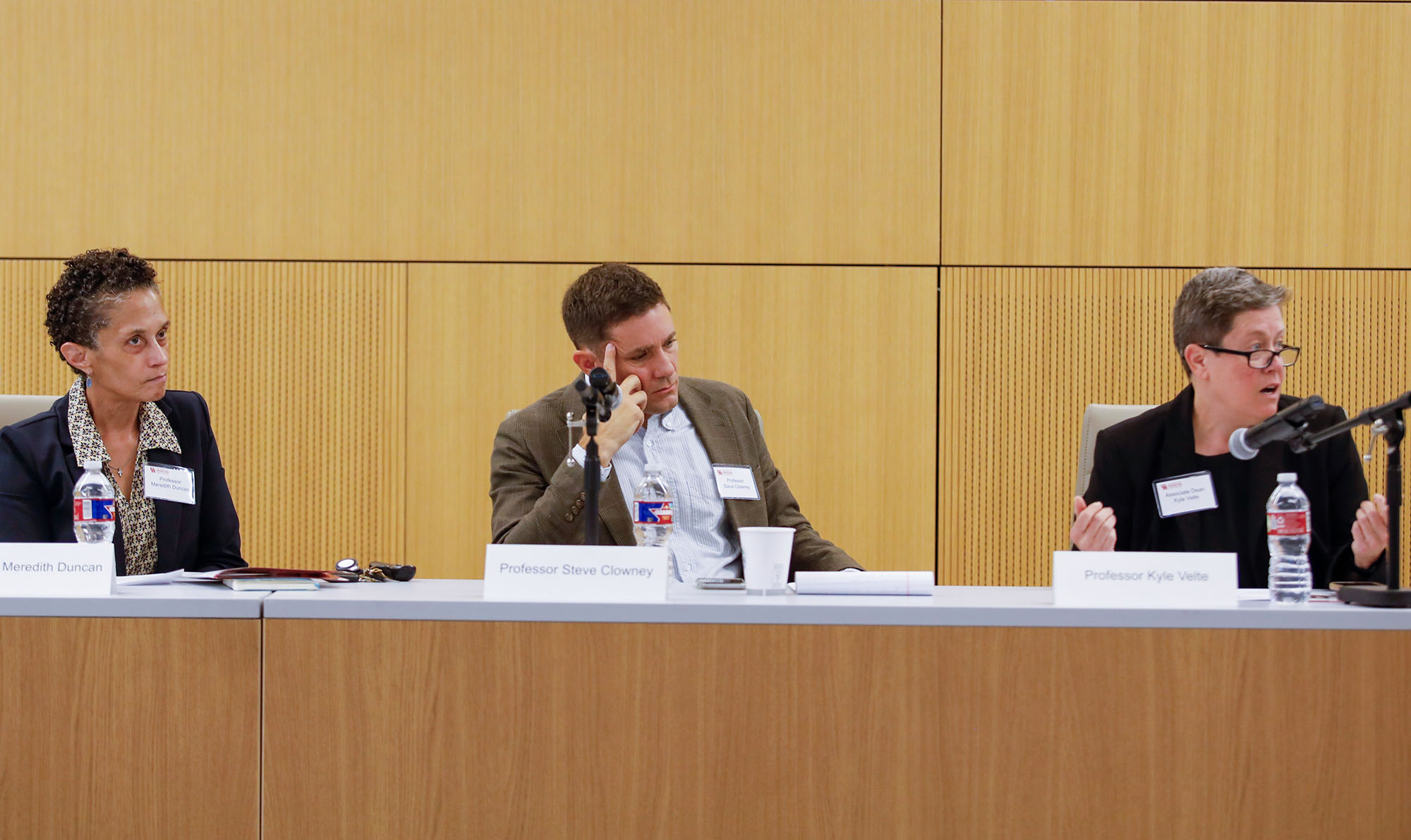
UH Law’s Alumnae College Professor of Law and Assistant Dean for Opportunities, Pedagogy, and Community Engagement Meredith J. Duncan and University of Arkansas School of Law Professor Steve Clowney shared insights about hiring practices in legal academia. The discussion was moderated by Associate Dean, Karelitz Chair in Evidence Law and Professor Kyle Velte with University of Kansas School of Law.
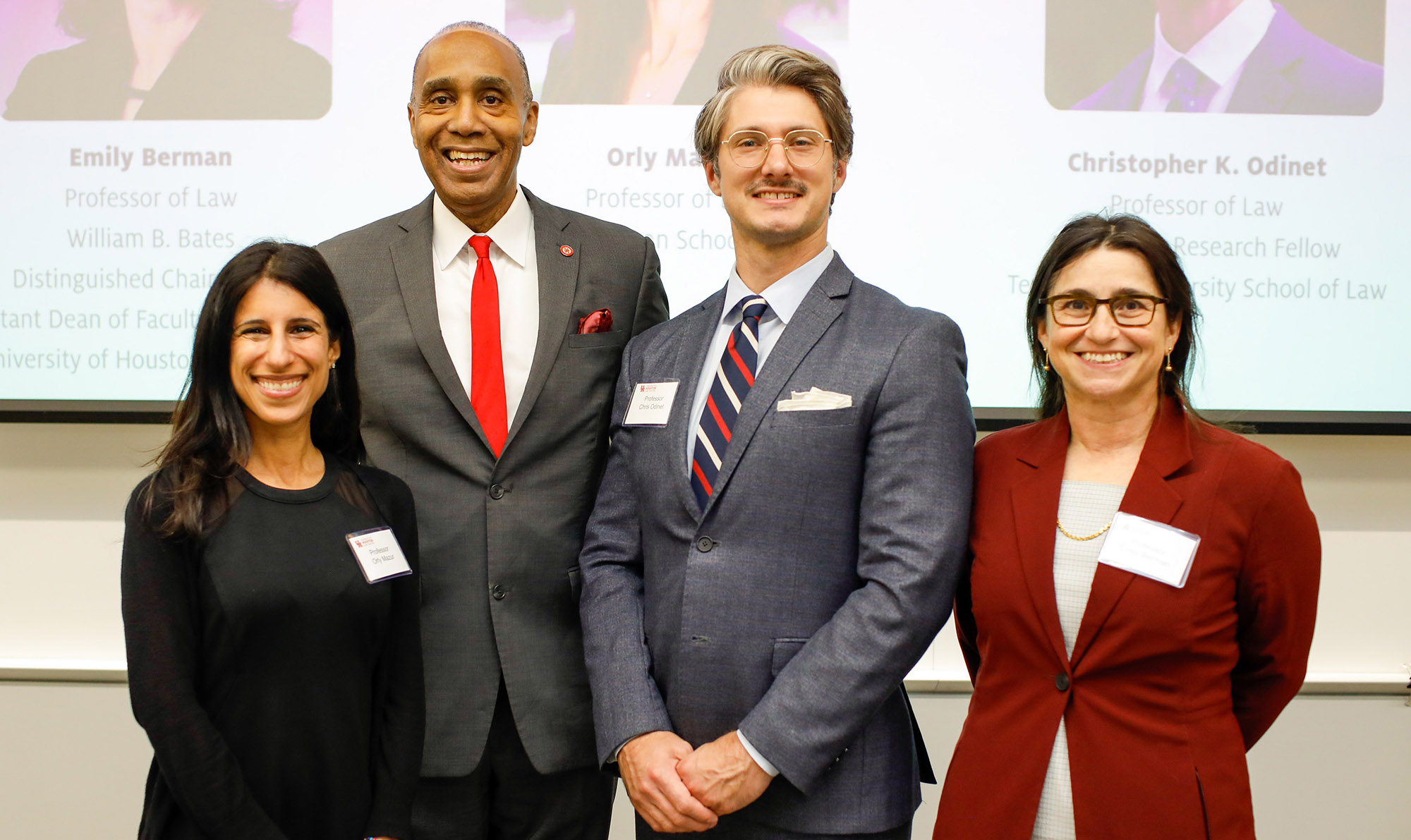
From L to R: Moderator Professor Orly Mazur of SMU Dedman School of Law, Dean Baynes with panelists Mosbacher Research Fellow and Professor Christopher K. Odinet from Texas A&M University School of Law and UH Law’s Assistant Dean for Faculty Development and William B. Bates Distinguished Chair in Law, Professor Emily Berman.
The program began with a late-night reception and then a networking breakfast, followed by remarks from Dean Baynes and Daniella Landers, president of the Houston Bar Association. Panels led by law professors addressed three key areas:
- “The Hiring Process:” Steve Clowney, University of Arkansas School of Law, Meredith J. Duncan, University of Houston Law Center, and moderated by Kyle Velte, University of Kansas School of Law
- “Scholarship:” Emily Berman, University of Houston Law Center, Christopher K. Odinet, Texas A&M University School of Law, and moderated by Orly Mazur, SMU Dedman School of Law
- “Teaching:” Martin Edwards, University of Mississippi School of Law, Peter N. Salib, University of Houston Law Center, and moderated by Victoria Mather, St. Mary’s University School of Law
While the sessions covered the complete hiring timeline, from FAR forms to callback interviews, panelists stressed the importance of scholarship for tenure-track success.
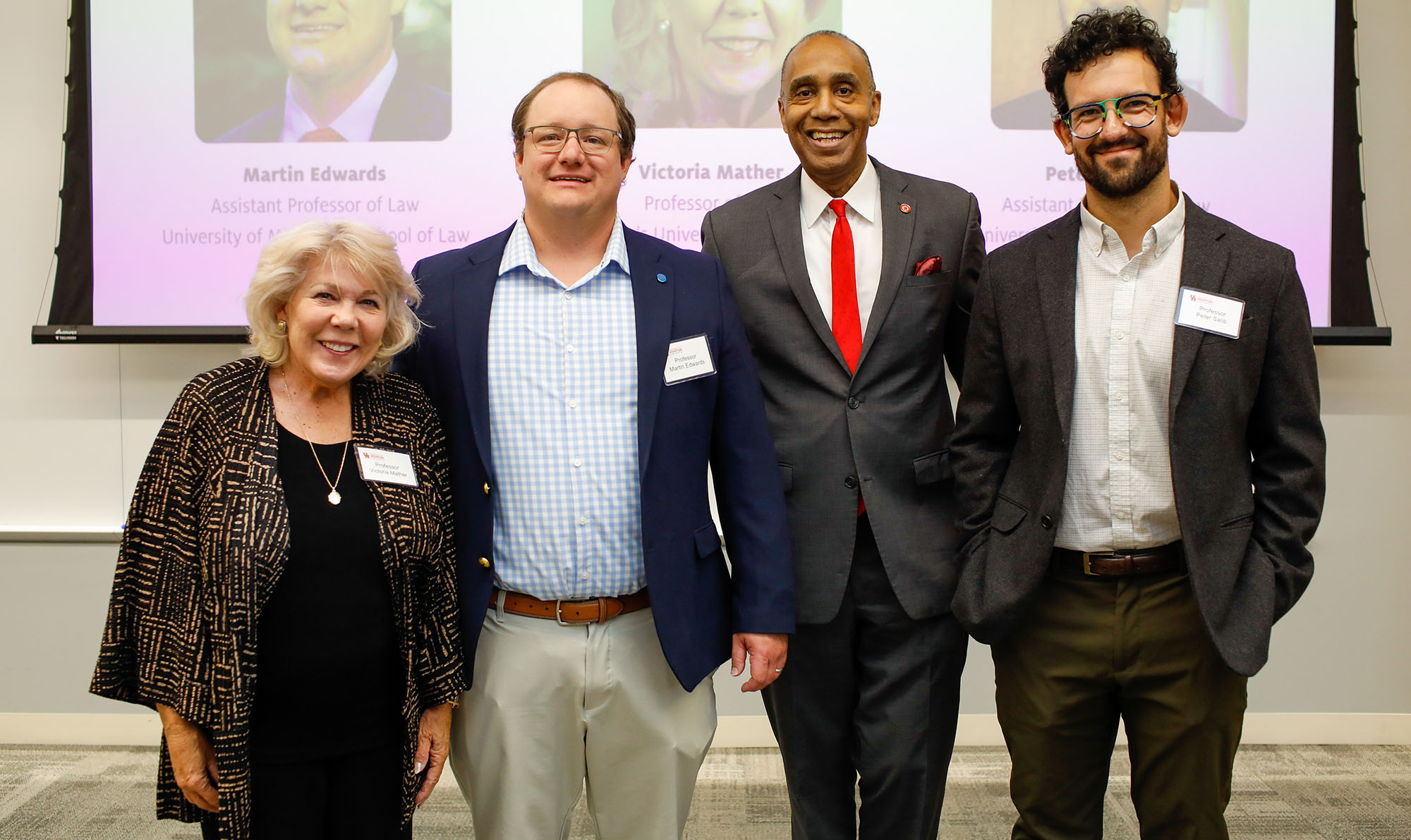
From L to R: Moderator Professor Victoria Mather of St. Mary’s University School of Law with panelist Professor Martin Edwards from University of Mississippi School of Law, Dean Baynes, and Assistant Professor Peter Salib from UHLC, after a robust panel discussion focused on effective teaching.
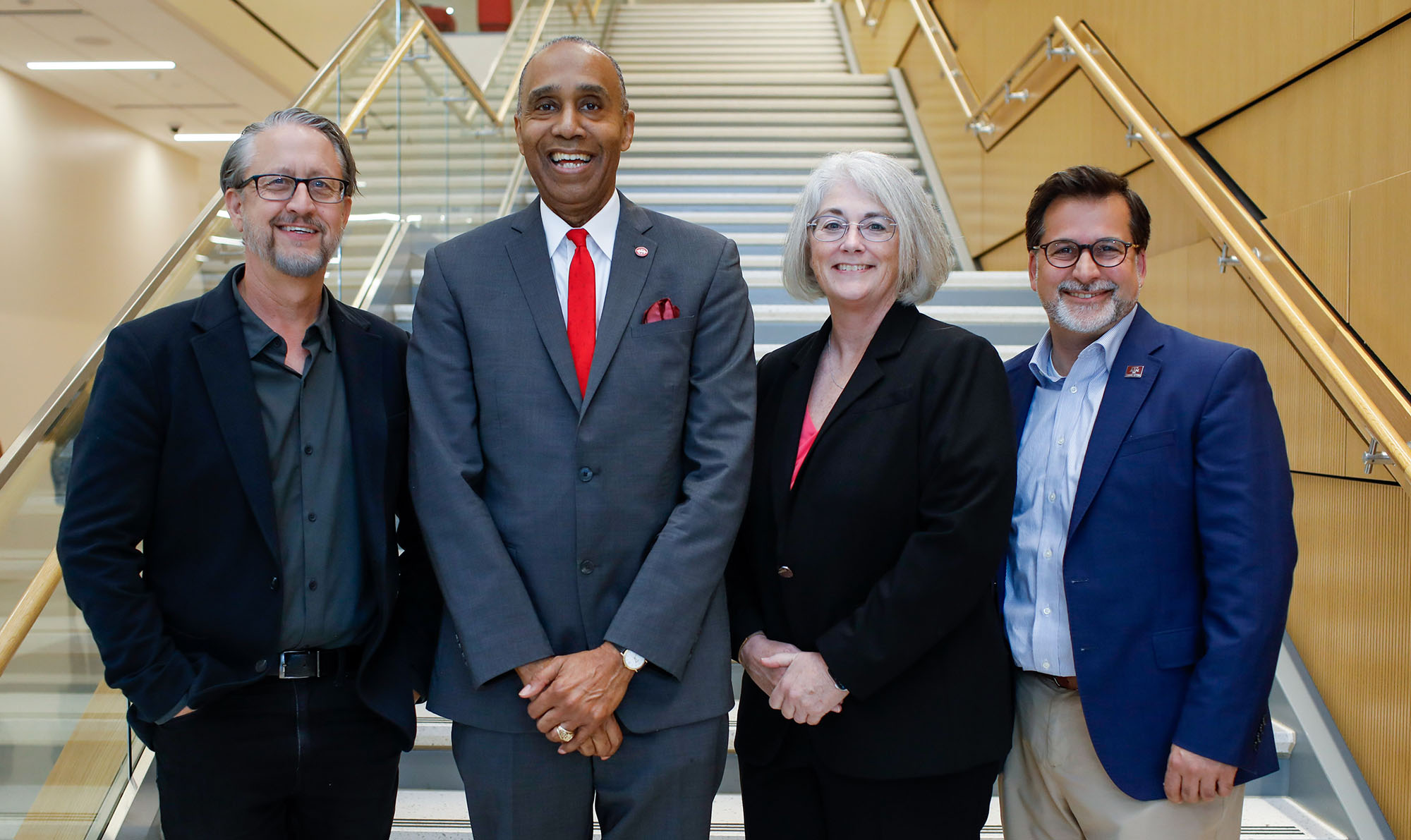
Dean Emeritus Douglas Sylvester of Sandra Day O’Connor College of Law, UH Law Dean Leonard M. Baynes, Dean Patricia Roberts of St. Mary’s University School of Law and Dean Robert Ahdieh of Texas A&M University School of Law explained their role in the process and shared their perspective and priorities faculty hiring.
“The thing that gains a law school notoriety is scholars,” said Professor Odinet. “Your ideas [are] what raise the level of the prestige of an institution. That’s why your scholarship is so important.”
The panelists shared that tenure-track professorships are not the only option available in legal academia. UHLC’s Professor Duncan listed several other pathways, including legal research and writing programs, clinical positions, adjunct teaching, and more. These paths can sometimes lead to tenure, but they also stand as meaningful and rewarding careers on their own, she said.
“My path was very circuitous,” shared Professor Velte. “I started as an adjunct at the University of Denver after practicing law. Then, I [continued] as a long-term contract professor, then as an assistant professor at Tech. That position springboarded me to my [tenured] position now at the University of Kansas.”
Professor Salib, speaking on the “Teaching” panel, emphasized that effective instruction is less about a single method and more about the environment an educator builds with their students.
“There are a lot of different ways you can run your classroom, but I think the most important thing is the culture you create with your students,” he said. “The culture I try to cultivate is one where we are trying to figure out the law together. I think cultivating an attitude where everyone understands that is important.”
For the final panel, deans from four schools discussed their perspectives and involvement in the hiring process. UH Law’s Dean Baynes moderated the panel, which also included Dean Robert Ahdieh of Texas A&M University School of Law, Dean Patricia Roberts of St. Mary’s University School of Law, and Dean Emeritus Douglas Sylvester of Sandra Day O’Connor College of Law.
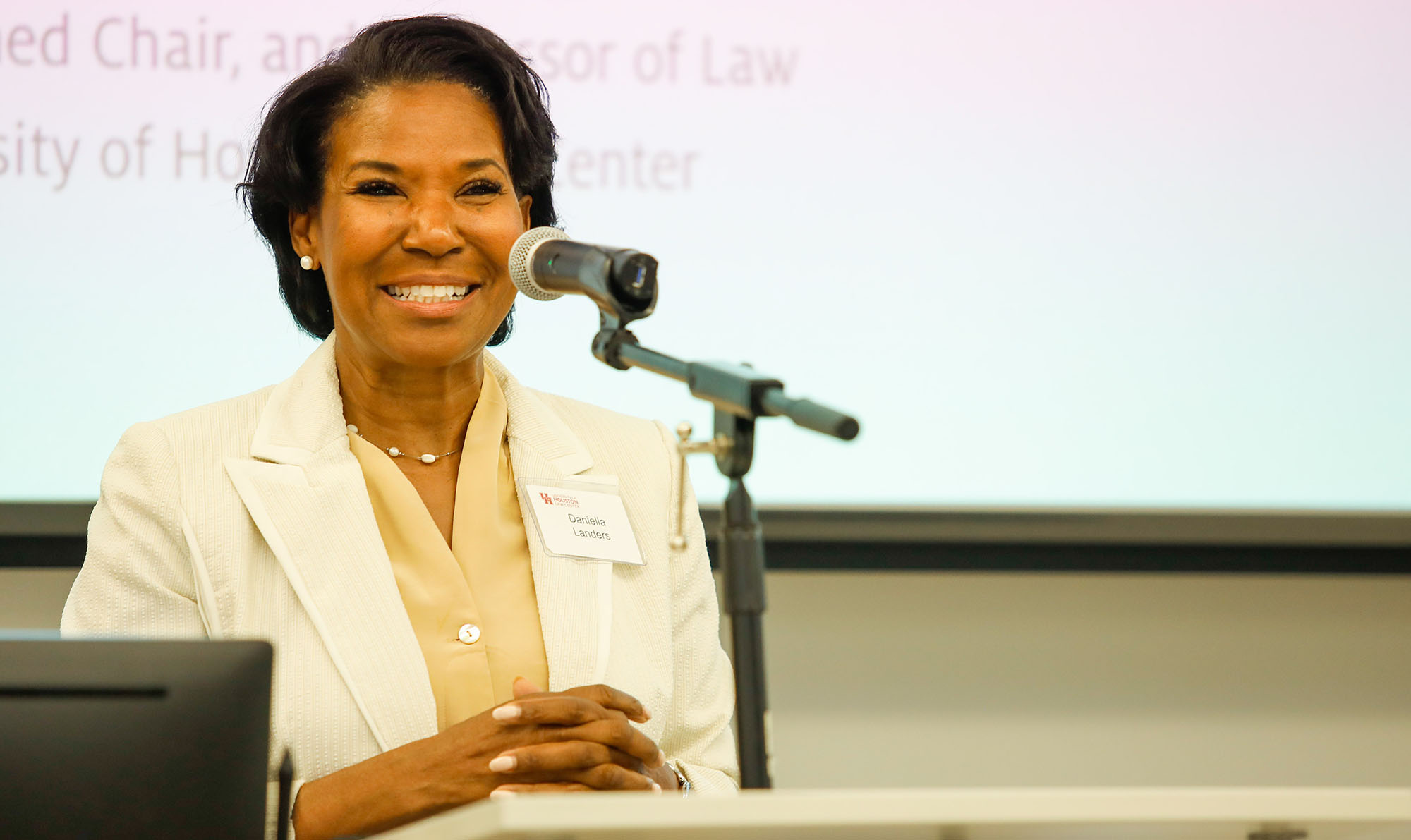
Houston Bar Association President Daniella Landers spoke at the workshop about the important role legal educators play in shaping future legal minds.

The event drew aspiring academics from across the Southwest and one participant who flew in from Africa. They spent the day taking notes, asking questions and networking.
The deans stressed the importance of understanding a law school's culture, community and environment before joining the faculty to ensure a good fit.
“We want to hear something about why [our school] matters to you,” Dean Roberts said. “Why can you see yourself [here]? Why is [our] mission something you could play a part in helping our students experience?”
Being adaptable also makes candidates more appealing to law schools, the panel shared. “Never underestimate the degree to which the flexibility in what you’re willing and able to teach,” Dean Ahdieh said. “You want an identity, that’s what we’re hiring for, but the flexibility should be there too.”
They shared that a juris doctorate degree holds endless possibilities. “When I first started out, I didn’t really think about teaching,” said Dean Baynes. “But I think there are always opportunities when someone identifies your [talent]. Law schools offer a wide range of opportunities, not just through teaching, but also through leading clinics and conducting research. We’re always looking for excellent people.”
The message at the end of the workshop was clear: success requires more than credentials for those seeking a career in legal academia. It demands a commitment to scholarship for tenure-track positions, adaptability in teaching, and a notable alignment with an institution’s mission and community.
“Our mission is to help build a strong pipeline of talented and well-prepared practitioners,” Landers said. “But it’s really the faculty [who] make a difference [with] their expertise, their passion and their commitment. I invite you to reflect on educators that made a difference in your lives and consider how you can shape the next generation of legal minds.”

